
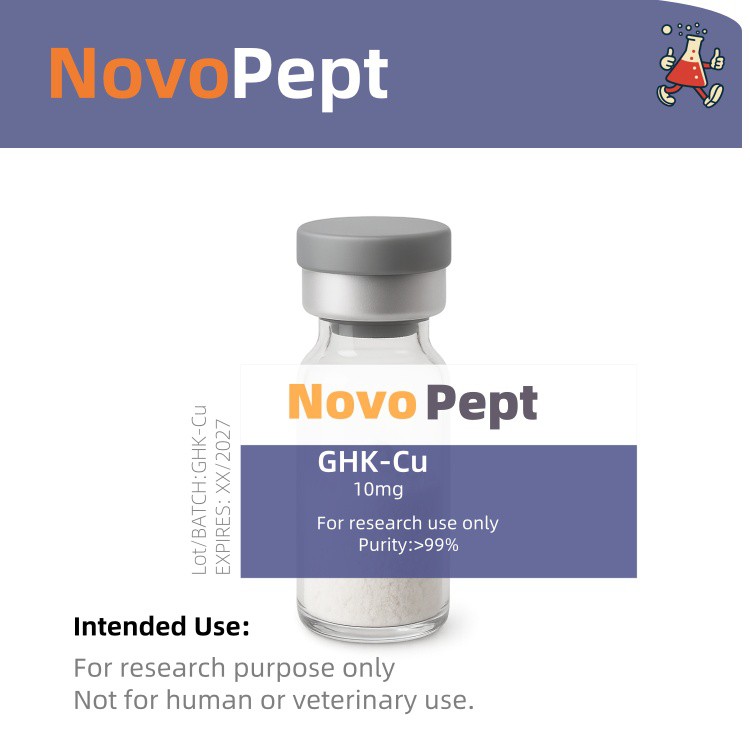
Copper Peptide GHK Cu Powder
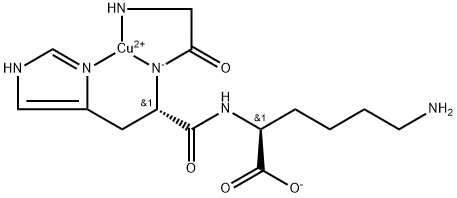
Molecular formula: C14H24N6O4 • Cu
CAS Number: 89030-95-5
Appearance: Usually supplied as a blue lyophilized powder (due to the copper ion)
what's GHK-Cu (CAS 89030-95-5)?
GHK-Cu (Copper Tripeptide-1) is a naturally occurring copper complex and one of the most studied bioactive peptides known for its skin regeneration, wound healing, and anti-aging properties. Our GHK-Cu is manufactured under strict quality controls to ensure high purity, consistency, and performance - ideal for cosmetic, skincare, research, and formulation needs.
Technical Specification
| Parameter | Specification |
|---|---|
| GHK-Cu CAS Number | 89030-95-5 |
| Molecular Formula | C14H24N6O4Cu |
| Molecular Weight | 377.90 g/mol |
| Purity | ≥ 98% (HPLC) |
| Appearance | White to off-white powder |
| Solubility | Soluble in water |
| Storage | 2-8°C, desiccated |
| Shelf Life | 2 years under recommended conditions |
Key Benefits of GHK-Cu
🌟 Skin Rejuvenation & Anti-Aging
- Stimulates collagen, elastin, and glycosaminoglycan synthesis.
- Reduces visible fine lines and wrinkles.
- Improves skin tone and firmness.
🩹 Enhanced Wound Healing
- Promotes tissue repair and accelerated wound closure.
- Supports angiogenesis and extracellular matrix remodeling.
✨ Antioxidant & Anti-Inflammatory
- Scavenges reactive oxygen species.
- Reduces inflammation and oxidative stress.
👩🔬 Cellular Health & Receptor Activation
- Modulates gene expression related to repair pathways.
- Enhances fibroblast and keratinocyte activity.
Mechanism of Action
GHK-Cu binds copper ions to form a stable complex. This complex:
Enters dermal cells via specific transporters.
Upregulates gene expression for collagen, elastin, and protective proteins.
Stimulates fibroblast proliferation and tissue remodeling.
Modulates metalloproteinases to balance matrix breakdown and synthesis.
The result is improved structural integrity, reduced inflammation, and enhanced repair processes at the cellular level.
GHK-Cu Side Effects
Common Side Effects
These effects are usually temporary and resolve with continued use or dosage adjustment:
- Skin redness or flushing
- Mild irritation or tingling, especially on sensitive skin
- Temporary warmth at the application site
Less Common
- Itching or mild rash
- Dryness or tightness
- Slight discoloration (related to copper content in poorly balanced formulas)
Rare side effects
- Allergic contact dermatitis
- Persistent inflammation
- Sensitivity reactions in copper-intolerant individuals
How to Minimize Side Effects
- Use recommended concentrations in formulations
- Perform a patch test before full application
- Avoid combining with strong acids or low-pH actives that may destabilize the peptide
- Store properly to prevent degradation

In summary:
GHK-Cu side effects are typically mild, rare, and preventable, making it a well-accepted ingredient in advanced skincare and peptide-based formulations.
Comparison with Other Peptides
| Feature | GHK-Cu | Matrixyl | Argireline |
|---|---|---|---|
| Collagen Stimulation | ✔️ High | ✔️ Medium | ❌ |
| Wound Repair | ✔️ Strong | Limited | ❌ |
| Anti-Inflammatory | ✔️ Yes | Moderate | Low |
| Skin Firming | ✔️ Yes | ✔️ Yes | Moderate |
GHK-Cu stands out for its multifunctional benefits beyond cosmetic tightening - into regenerative biology and wound healing.
FAQ
Q1. How long does it take to see results with GHK-Cu?
A: Results are typically gradual rather than immediate. Many users report noticing changes after 4–5 weeks, while others require several months of consistent use to observe visible improvements in skin quality, hair condition, or healing. GHK-Cu is not considered a "quick-fix" peptide, and patience is essential.
Q2. What is the typical daily dose of GHK-Cu?
A: There is no universally established clinical dose. Based on community-reported experience:
Common range: ~1–2 mg per day (often via subcutaneous injection)
Higher end: Some users experiment with up to 5 mg twice daily, though this is less common and involves more uncertainty
Most protocols are anecdotal rather than medically standardized.
Q3. Can GHK-Cu be injected every other day with a double dose?
A: While this approach may seem convenient, it can cause peaks and troughs in copper peptide exposure. Such fluctuations may reduce effectiveness or increase the risk of side effects. For this reason, most users prefer daily or split daily dosing for more stable exposure.
Q4. Is GHK-Cu safe? Should I worry about copper toxicity?
A: Because GHK-Cu contains copper, concerns about copper overload are common. Typical questions include:
Whether zinc supplementation is needed to balance copper
Whether long-term use leads to copper accumulation
Whether cycling off is necessary
Many users report normal blood markers when using conservative doses. However, monitoring copper and zinc levels and avoiding excessive dosing is considered the safest approach.
Q5. Do I need blood tests while using GHK-Cu?
A: Many experienced users recommend lab monitoring, including:
Baseline tests before starting (copper, zinc, liver function)
Periodic follow-up tests during use
This helps reduce the risk of copper imbalance or other unintended effects.
Q6. Why does GHK-Cu sting when injected?
A: A stinging or burning sensation at the injection site is commonly reported. Strategies used to reduce discomfort include:
Further diluting the peptide
Injecting slowly with smaller volumes
Rotating injection sites
Combining with peptides such as BPC-157, which some users feel reduces irritation
Q7. Should GHK-Cu be cycled or used continuously?
A: A frequently mentioned approach is 8 weeks on / 8 weeks off. Reasons for cycling include:
Avoiding potential peptide desensitization
Reducing prolonged copper exposure
Allowing physiological "reset" periods
Not all users cycle, but many prefer periodic breaks for long-term use.
Q8. Can GHK-Cu be stacked with other peptides?
A: Yes, stacking is common in user-reported protocols, such as:
GHK-Cu + BPC-157 for healing support and reduced injection discomfort
GHK-Cu + TB-500 for tissue repair and recovery
Cosmetic-focused "glow" stacks
These combinations are anecdotal, and introducing one peptide at a time is generally considered safer.
Q9. What protocols do other users follow?
A: Commonly reported examples include:
1.5 mg daily, 8 weeks on / 8 weeks off
2 mg daily, 4 weeks on / 1 week off, repeated over several months
5 mg twice daily, considered aggressive and less common
There is no single "best" protocol-most users self-adjust based on goals and tolerance.
Q10. What's the bottom line on using GHK-Cu?
A:Start with low to moderate dosing (around 1–2 mg daily)
Expect gradual results, not immediate changes
Monitor labs and personal response
Consider cycling to reduce long-term risk
Treat community-reported experiences as informational, not medical advice
Why Choose Us as your GHK-Cu Supplier?
✅ Premium Quality - High-purity GHK-Cu powder verified by HPLC.
✅ Reliable Supply Chain - Batch traceability and on-time delivery.
✅ Technical Support - Formulation assistance from peptide experts.
✅ Regulatory Compliance - Documentation ready for commercial use.
✅ Competitive Price- Value-driven pricing for bulk R&D and manufacturing.
certifications

Shipping methods

| Country | Delivery time |
| Untied states | 7-15 DAYS |
| Australia | 7-12 DAYS |
| Germany | 7-12 DAYS |
| Canada | 8-10 DAYS |
| New zealand | 7-10 DAYS |
| Uk | 5-10 DAYS |
| Thailand | 5-8 DAYS |
| Malaysia | 5-8 DAYS |
| Vietnam | 5-8 DAYS |
The delivery time shown above is an estimate. Shipping routes and freight capacity may change from time to time. For the most accurate delivery schedule, please contact us directly.
Payment terms

Hot Tags: copper peptide ghk cu powder, China copper peptide ghk cu powder manufacturers, suppliers, factory, cu peptide, Melanotan Ii Skincare, s acetyl l glutathion 200 mg, GHK Cu, coq10 100mg, glutacid l glutathione


Send Inquiry
